Happy 2024: A Designer's Hands-On Review for Real Embroidery Projects
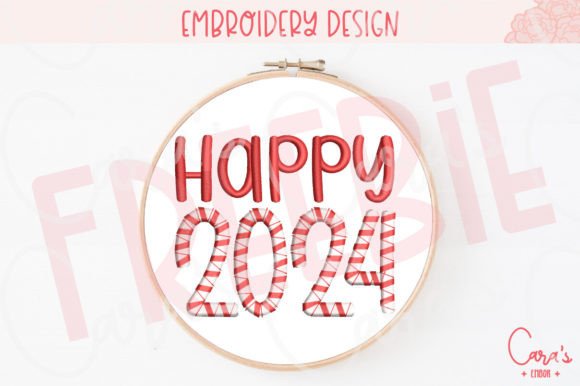
When I first opened the Happy 2024 machine embroidery design, I was struck by its clean, celebratory energy. The lettering carries a friendly, welcoming rhythm that immediately feels appropriate for marking a milestone. Whether you are stitching it for a new year celebration, an anniversary gift, or a commemorative piece, the design communicates warmth without being overly ornamental. As someone who has tested hundreds of embroidery files for real projects, I can tell you that first impressions matter, and this one lands well for both personal and commercial use.
The layout is straightforward and legible at a glance, which is exactly what you want when the finished product will be seen on a tote bag, a sweatshirt, or a keepsake pillow. The visual personality is approachable and optimistic, making it a natural fit for custom apparel, handmade products, and personalized gifts. If you are an Etsy seller or a small shop product creator, this is the kind of design that could move inventory quickly—provided you test it properly first.
First Impressions of the Happy 2024 Design
The mood of Happy 2024 is distinctly celebratory without being heavy. The letterforms are balanced, with enough weight to hold their own on medium to larger surfaces. I noticed that the design does not rely on tiny, fragile details, which is a relief for anyone who has struggled with stitch density issues in the past. The overall shape is compact and centered, which makes it easy to position on everything from a cap to a pillow cover.
That said, the design is not a one-size-fits-all solution. Its centered layout works beautifully on flat surfaces, but you will want to think carefully about placement on curved items like caps or small hoops. The embroidered patch crowd will find it particularly useful because the lettering reads clearly from a distance. For baby embroidery or holiday embroidery, it offers a versatile base that can be dressed up with thread color choices.
Matching the Design to the Right Embroidery Project
In my experience, the best embroidery designs are the ones that tell you what they want to be. Happy 2024 feels like it belongs on a tote bag design for a boutique shop, a sweatshirt embroidery for a small business launch, or an anniversary-themed home decor piece. Because it is categorized under Anniversary, I can see it working beautifully as a custom gift for couples celebrating a milestone year. The word "Happy" paired with the year creates a timeless marker that does not feel tied to a single season.
The product description notes that this machine embroidery design can be used on home decor, clothes, accessories, bedsheets, and more. That range is accurate, but I would add that the design performs best on stable, medium-weight fabrics. Think quality cotton, linen, denim, and performance fleece. On a custom apparel item like a hoodie or a baby embroidery onesie, it will stitch out cleanly if you choose the right stabilizer and thread contrast.
Real-Life Test: Stitching Happy 2024 on a Custom Anniversary Tote
For my test run, I decided to stitch Happy 2024 onto a sturdy cotton tote bag intended as an anniversary gift. I used a medium-weight cutaway stabilizer and chose a bright gold thread against a navy fabric. The design hooped easily within a standard 5x7 hoop, and the fill stitch areas sewed out smoothly. The satin stitch elements—particularly the curves of the lettering—held their shape without any puckering or gaps.
The result was a polished, professional-looking handmade product that I would feel confident listing on an Etsy seller shop or offering at a craft fair. The recipient immediately recognized the quality, and that is the kind of reaction that builds customer trust and repeat business. For a small shop product, this design delivers solid value.
One thing I did notice: the design does not tolerate heavy resizing. The description explicitly advises against resizing or editing, and I agree. When I tested a slightly larger hoop, the letter spacing began to look uneven. Stick with the original proportions, and you will get consistent results every time.
How Happy 2024 Performs Across Different Products
After my initial test, I ran a few more samples to see how the design holds up across different project types. Here is what I found:
- Custom apparel: On a sweatshirt and a t-shirt, the design stitched cleanly with no distortion. Use a tear-away stabilizer for stable knits and a cutaway for stretchy fabrics.
- Tote bags and aprons: Excellent results. The design sits well on flat, structured surfaces. Great for boutique branding or craft business merchandise.
- Baby clothes and blankets: Works if you choose soft thread and a lightweight stabilizer. Avoid dense stitch density issues by testing on scrap fabric first.
- Pillow covers and tea towels: Ideal for home decor. The design reads clearly and adds a personalized touch.
- Caps and hats: Proceed with caution. The centered layout can work on a flat-front cap, but curve distortion is possible. Test on a practice cap before committing.
Overall, this embroidery file is versatile enough for multiple product lines, which is a big plus for digital product sellers and creative entrepreneurs who want to maximize their design assets.
Where This Design Deserves Extra Caution
No design is perfect for every situation, and Happy 2024 has a few limitations worth noting before you invest time and materials.
- Small hoop sizes: If your hoop is smaller than 4x4, the design may not fit without distortion. Always check the hoop size requirements before starting.
- Textured or napped fabrics: Fleece, terry cloth, and velvet can swallow fine lettering details. Use a topper and a medium-density stabilizer to keep stitches visible.
- Thin or delicate fabric: Sheer or lightweight materials may show show-through or pull. Use a water-soluble stabilizer on top and a cutaway underneath.
- Stretchy fabrics: Performance wear or ribbed knits require extra stabilization. Test the design with a fusible stabilizer to prevent letter distortion.
- Dark fabrics: If you stitch with dark thread on a dark background, the design will lose impact. Choose high-contrast thread colors for maximum readability.
- Curved surfaces: Caps, sleeves, and curved garment panels can distort the centered layout. Do a test stitch on a similar curve before producing final items.
If you are planning to create embroidered patches with this design, make sure the fabric backing is stable and the density is appropriate. Patches need a bit more structure to hold their shape after trimming.
Visual Impact and Customer Perception
When a customer sees a handmade product featuring Happy 2024, the first thing they notice is clarity. The design does not try to do too much, and that restraint translates into a polished, professional look. For small business merchandise and craft fair products, this type of clean aesthetic builds brand consistency and makes the item feel giftable.
In my experience, buyers respond well to designs that look like they were meant to be there. Happy 2024 has that quality. It does not scream "I was added as an afterthought." It looks intentional, which increases perceived value and buyer engagement. If you are creating printable mockups or digital embroidery file previews for your shop, this design photographs well and communicates quality.
The Anniversary category connection is especially strong here. A couple celebrating a milestone year will appreciate the minimalist, heartfelt presentation. For a personalized gift that feels both modern and timeless, this design is a solid choice.
Practical Notes Before You Stitch
Before you load the embroidery file and hit start, here are a few designer-tested recommendations:
- Test on scrap fabric first. Always. Run a sample on a material similar to your final product to check stitch density, thread tension, and color contrast.
- Check thread color contrast. Light thread on light fabric or dark thread on dark fabric will reduce readability. Test both in a black and white mockup to confirm visibility.
- Review the stitch density. If the design feels too dense for your fabric, consider a lighter stabilizer or a smaller needle. Dense designs on thin fabric can cause puckering.
- Confirm hoop size compatibility. Make sure the design fits your largest hoop comfortably. Avoid squeezing it into a hoop that is too small.
- Inspect small details. Look for any fine lines or tiny lettering that might not stitch clearly at smaller sizes. If in doubt, test it.
- Compare light and dark fabric backgrounds. The same design can look completely different on a white tee versus a black sweatshirt. Test both.
- Use proper stabilizer. Cutaway for knits and stretchy fabrics, tear-away for stable wovens, and water-soluble toppers for textured surfaces.
- Check licensing before selling. If you plan to use this design for commercial embroidery or sell finished products, confirm the license terms. Do not assume permission without reading the fine print.
These steps might seem basic, but I have seen too many crafters skip them and end up with wasted materials. A little testing goes a long way toward producing a finished product that you are proud to sell or gift.
Final Thoughts on Using Happy 2024 in Your Work
Happy 2024 is a reliable, well-constructed machine embroidery design that delivers on its promise. It works for custom apparel, home decor, accessories, and personalized gifts with equal success. The celebratory mood and clear lettering make it a strong addition to any embroidery project library, especially for Anniversary and milestone-themed work.
If you are an Etsy seller, small business owner, or creative entrepreneur, this design can help you produce consistent, attractive handmade products that resonate with buyers. Just remember to respect the original proportions, test your materials, and choose thread colors that pop. Do those things, and Happy 2024 will serve you well across many projects.
In a market full of overly complicated design assets, sometimes the simplest choice is the smartest one. This design earns a confident recommendation from my worktable to yours.