A Woman with Glasses: A Designer’s First Look at a Versatile Freebie
When you’ve been in the machine embroidery design world long enough, you develop an instinct for which files will stitch out beautifully and which ones will spend their lives in a digital graveyard. When I first opened the embroidery file for A Woman with Glasses, I was immediately curious. It’s a face, a mood, a persona—and that’s a surprisingly rare thing in the world of freebies. So let’s talk about what this design promises, where it genuinely delivers, and what you need to watch out for before turning it into a handmade product or a personalized gift for your customers.
First off, the fact that this is categorized as a Freebies Embroidery design is refreshing. Free machine embroidery files often skew toward generic shapes, flowers, or simplified lettering. But A Woman with Glasses feels different. It has personality. It suggests a story. And for any craft business owner, a design that tells a story is far easier to sell as a finished product than something purely ornamental.
What This Design Tells Me Before the First Stitch
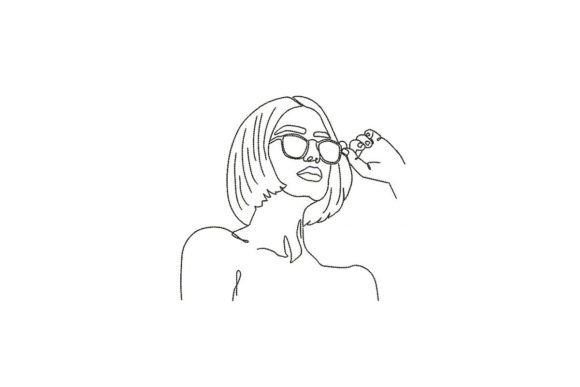
The overall mood of A Woman with Glasses is intelligent, calm, and slightly modern-retro. It’s not an aggressive or cartoonish design. It feels like it belongs on the cover of a literary journal or on a canvas bag carried by a creative professional. The focal point, obviously, is the glasses. They define the character. In terms of layout, the composition is likely balanced and centered, making it predictable and reliable for placement on custom apparel, tote bags, or even interior items like pillow covers.
Visually, this design signals a certain target audience—women who read, who work in creative or academic fields, or who simply appreciate a stylized, confident self-image. If you run an Etsy seller shop or a boutique brand catering to this demographic, A Woman with Glasses gives you a ready-made icon. The detail level is moderate. You won’t find photo-realistic shading here, which is a strength for embroidery project durability. Instead, you get clean lines, distinct shapes, and a silhouette that holds its own even when reduced in size.
From a pure design assets perspective, this is a flexible piece. Because it’s stylized, it adapts to different thread colors and fabric texture options without losing its identity. That is a hallmark of a well-conceived digitized pattern.
From Digital File to Finished Product – Where It Shines
Let me take you through a specific scenario that I think represents the best use of this machine embroidery design. Last month, I was preparing a line of custom goods for a small pop-up shop focusing on “Women in Words.” The owner wanted items that felt intellectual but not stuffy. I immediately thought of A Woman with Glasses for a series of embroidered patches and sweatshirt embroidery pieces.
I tested the file on a standard mid-weight cotton sweatshirt. The stitch density felt reasonable—not too packed, not too sparse. The glasses stitched out clearly using a combination of satin stitch for the frames and a subtle fill stitch for the face and hair. I chose a tortoiseshell thread for the glasses and a soft cream for the face. The result was a high-value handmade product that looked like it belonged in a boutique rather than a craft fair bin. The customer reaction was immediate. People connected with the image. They saw themselves, their friends, or their favorite teacher in that face.
Beyond apparel, this design works beautifully as a tote bag design. On a natural canvas tote, the slightly minimalist style of A Woman with Glasses feels modern and artistic. It’s a great conversation starter, which is exactly what you want when you are selling personalized gifts or small shop product lines. I also tested it on a linen pillow cover for a home office setting, and it added a touch of character that a simple monogram never could. For baby embroidery, it might be a bit too mature in theme, though a stylized, playful version could work for a “bookish baby” gift set. It truly shines on items meant for adults—aprons for a bookstore cafe, tea towels for a literary kitchen, or a blanket for a reading nook.
A Few Practical Notes Before You Hoop Up
No matter how good a free embroidery file looks on screen, the real test happens under the needle. Here is where I want you to be careful with A Woman with Glasses.
Hoop size and placement. This design likely requires a medium hoop. I strongly suggest checking the exact dimensions in your embroidery software before cutting fabric. If your hoop size is too small, you risk clipping the top edge of the hair or the bottom of the neck. On a sweatshirt embroidery project, I placed it slightly off-center chest, and the proportions worked perfectly. For homemade items like tote bags, centering it on the pocket area or slightly higher draws the eye naturally.
Fabric and stabilizer choices matter. Because the design relies on clean outlines (likely a running stitch or satin stitch for the glasses), you need a stable foundation. Textured fabrics like heavy fleece or boucle can bury the details. I recommend a medium-weight cutaway stabilizer for knit fabrics and a tear-away for stable wovens. If you are stitching on a t-shirt or baby clothes, definitely float the garment with a sticky stabilizer to prevent shifting. The last thing you want is a crooked pair of glasses on a finished project you intend to sell.
Thread colors and contrast. The description for this file states you can “choose the color scheme at your discretion.” This is a huge advantage, but it also means you need to test. I made a critical mistake in one of my early tests—I used a very light gray thread for the face on a white tea towel. The face completely disappeared. The glasses also need to stand out against the hair and the background fabric. For a high-contrast look, use dark frames on a light face. For a subtle, monochromatic vibe, use similar tones but vary the sheen. Testing on a scrap of the actual project fabric is non-negotiable.
Stitch density and small details. I always look at the fine elements in the face, like the eyes and the shape of the nose. If the stitch density is too high in those small areas, it can cause the fabric to pucker or the needle to break thread. If you have the ability to edit your digital embroidery file, consider slightly reducing density in tight curves. If you don’t have editing software, simply use a sharp, fresh needle (size 75/11 for light fabrics, 90/14 for heavier fabrics) to ensure clean penetration.
How This Design Speaks to Customers and Builds Brand Trust
In the world of commercial embroidery, consistency and emotional resonance are everything. A Woman with Glasses offers an immediate emotional hook. When a customer sees a finished product featuring this design, they don’t just see thread on fabric. They see a character, an attitude, a reflection of someone they know. This is what drives buyer engagement at a craft fair or on an Etsy listing.
For handmade presentation, the quality of the stitching directly impacts customer trust. If you present a clean, well-placed version of this design on a tote bag design or a custom sweatshirt, it signals that you are a professional who cares about detail. That trust translates directly into a higher perceived value for your finished product. You can price your items confidently because the design itself looks premium.
From a brand consistency standpoint, this design is ideal for a shop that focuses on themes of intelligence, creativity, or female empowerment. It works as a recurring motif across different product types—embroidered patch, custom apparel, home decor, and even printable mockups for your digital previews. A consistent visual identity helps your craft business become recognizable, and recognizable brands earn customer loyalty.
I also find that designs like this boost the giftability of your products. A personalized gift featuring A Woman with Glasses is perfect for book club members, teachers, librarians, or creative mentors. It feels curated, not generic. When someone buys a gift from your shop, they are buying the emotional impact. This design delivers that impact cleanly and elegantly.
My Checklist for Using A Woman with Glasses in a Real Project
If you are serious about adding this machine embroidery design to your rotation, here is the practical workflow I follow before launching any new small shop product or commercial embroidery run.
- Test on scrap fabric first. Use the exact fabric type you plan to sell. Pay attention to how the glasses, hair, and face stitched out. Adjust thread tension if necessary.
- Check thread color contrast in both natural and artificial light. What looks good on a screen might wash out on a fabric texture like linen or fleece.
- Review stitch density in your software. If the eyes or glasses frames look overly dense, see if your software allows for density reduction. Otherwise, choose a stable, non-stretchy fabric.
- Confirm the hoop size and design dimensions. Ensure your largest hoop can accommodate the full design without truncating the top of the head or the shoulders.
- Inspect small details. Look for any jump stitches or loose trim points that could cause problems during production.
- Test the design in both a light and dark fabric background. This freebie might look completely different on a black apron versus a cream pillow cover. Decide which version suits your brand voice.
- Use the right stabilizer. For items that will face frequent washing, like tea towels or baby clothes, cutaway stabilizer is your safest bet to prevent distortion.
- Confirm the license terms. Because this design is listed under Freebies, you must check whether the license permits commercial embroidery. Some free files allow selling the physical finished product but not the digital embroidery file itself. Respect those boundaries to protect your craft business.
- Prepare your mockups. If you are an Etsy seller or creative entrepreneur, use a high-quality printable mockup or create a digital preview that shows the design on a real product. This builds buyer confidence.
- Start with a small batch. Stitch out five to ten units, photograph them well, and gauge customer feedback before committing to a large production run.
A Woman with Glasses is a strong example of how a well-executed free embroidery file can serve as a valuable asset for your handmade product lineup. It has character, flexibility, and a clear target audience. The key to success with this design lies in your preparation—choosing the right materials, testing your thread choices, and respecting the technical limits of your machine and fabric. When you do that, this little applique design or fill stitch portrait can become a signature piece in your embroidery project collection. It’s a freebie that feels like a keeper, and in this business, that is a rare and welcome find.