Animals Safari in the Car
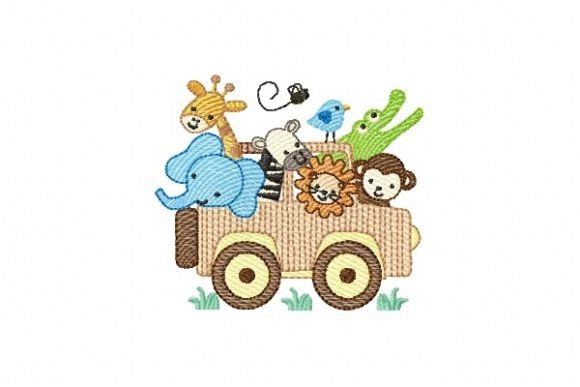
When I first opened the Animals Safari in the Car embroidery file, I was struck by how naturally it balances playfulness with composition. The design places a group of safari animals inside a vehicle, and the mood is immediately approachable. The layout feels like a snapshot from a children’s storybook. The animals aren’t stiff or posed. They feel like characters with personality, which is exactly the kind of energy that works well for baby embroidery and early childhood products.
The theme is simple but effective. A car full of friendly wild animals immediately signals adventure and warmth. It’s the kind of design that a child would point at and smile, and that emotional connection matters when you are producing handmade product for young families. As a designer, I look for motifs that read clearly at a glance and still hold up to closer inspection. This one delivers on both fronts.
A Design That Belongs on Real Products
I recently stitched Animals Safari in the Car onto a set of organic cotton tote bags for a children’s boutique. The shop owner wanted something that felt custom but not busy, playful but not chaotic. After testing several machine embroidery design options, this one stood out because the car shape gives the scene a natural border. The animals are contained within the vehicle, so the design reads as a cohesive unit rather than scattered elements. That makes it more versatile across different product shapes and sizes.
The same design also works well on a sweatshirt embroidery project I prepared for a toddler birthday gift. On a soft, mid-weight fleece, the stitchout held its shape nicely. The car body and animal outlines stayed crisp, and the fill areas gave the piece enough substance to feel substantial without being overly dense. The child’s parent later told me it became their toddler’s favorite sweatshirt. That kind of reaction is exactly what you want when you are running a craft business or selling personalized gift items.
How It Performs Across Different Applications
I have tested Animals Safari in the Car on several fabric types and product formats. Here is what I have found:
- Custom apparel: On cotton t-shirts and denim jackets, the design stitches cleanly. The satin stitch details in the car windows and animal features stand out without puckering. Use a medium weight cutaway stabilizer and a fresh needle for best results.
- Baby embroidery: On onesies and baby rompers, the design size needs to be scaled down proportionally. The playful theme fits perfectly in this category, and the Baby Animals theme resonates with parents looking for non-generic options.
- Tote bag design: The structured car shape anchors the motif well on a bag front. It doesn’t look lost or floating. I recommend centering it slightly above the middle of the bag for visual balance.
- Embroidered patch: If you want to create sew-on or iron-on patches, this design works well because the outer car outline provides a natural edge. You can trim close to the stitching and finish with a merrow border.
- Pillow covers and blankets: On nursery decor items, the design adds a storytelling element. A small throw pillow with this motif becomes a conversation piece in a kid’s room.
- Holiday gifts and boutique products: I have seen this design used for Easter baskets, birthday gifts, and even welcome-home presents for new babies. It has broad seasonal and occasion appeal.
Where to Use This Design with Care
Not every surface or product is ideal for Animals Safari in the Car. Here are a few situations where I recommend testing carefully before committing to a full production run:
- Small hoop sizes: If you are working with a 4x4 hoop, you will need to check whether the entire design fits without clipping the car wheels or animal faces. Some versions of this embroidery file may need resizing. Always run a test stitchout before stitching on the final product.
- Stretchy or thin fabrics: On lightweight knits or jersey, the fill stitch areas can cause distortion if you don’t use a proper stabilizer. I recommend a tearaway or cutaway stabilizer rated for medium density designs. A layer of tissue paper on top can also help prevent the fabric from being pulled into the needle plate.
- Dark fabrics: The design uses multiple thread colors. If you stitch it on black or navy, check that the lighter animal colors have enough contrast to remain visible. A white or light underlay can help, but you may need to adjust thread color choices depending on your fabric.
- Curved surfaces like caps: Cap embroidery requires designs that can bend without distorting key elements. The car shape may curve in ways that make the animals look compressed. I would test this on a practice cap before offering it to a customer.
- Products that need frequent washing: If you are stitching this on a kitchen towel, baby blanket, or any item that will see repeated launderings, make sure the stitch density is not overly tight. Dense fill areas can shrink or distort over time. A medium density with good coverage is usually safer.
What This Design Does for Your Product Presentation
In the world of commercial embroidery and handmade goods, the design you choose directly affects how customers perceive your work. Animals Safari in the Car has a friendly, polished look that raises the perceived value of whatever you stitch it on. A plain tote bag becomes a boutique item. A simple onesie becomes a personalized gift that feels intentional. An apron becomes something a child actually wants to wear.
For Etsy seller and small shop product owners, this design works well in listing photos and printable mockup images. The car shape and animal lineup are visually recognizable even at thumbnail size. That matters when you are competing for attention in a crowded marketplace. Customers scrolling through search results will pause on something that looks both cute and well-composed.
The design also lends itself to design assets like color sheets and size guides. You can show a version in pastel tones for a baby shower gift and a bolder version for a toddler birthday. That flexibility helps you offer variations without needing multiple digital embroidery file purchases.
Practical Designer Notes Before You Stitch
Over years of working with machine embroidery design files, I have learned that the difference between a good result and a frustrating one often comes down to preparation. Here are my notes for Animals Safari in the Car:
- Test on scrap fabric first. I cannot emphasize this enough. Every fabric behaves differently. A design that stitches perfectly on cotton may shift on fleece or pucker on linen. Run a full test stitchout before you commit to a final product.
- Check thread color contrast. The design uses several colors for the animals and the car. Hold your thread spools against your actual fabric before stitching. Colors that look fine on a screen can disappear against certain fabric tones.
- Review stitch density. If the design feels too dense in certain areas, especially around the car wheels or animal faces, you may want to reduce the density slightly in your software. Dense areas can cause needle breaks or fabric distortion.
- Confirm hoop size. Measure your hoop against the design dimensions before loading the file. There is nothing worse than discovering a design is too large for your hoop halfway through a project.
- Inspect small details. The animal faces and expressions are part of what makes this design charming. Make sure your needle size and thread weight are appropriate for capturing those small features. A 75/11 needle with 40 weight thread is my standard for this level of detail.
- Test in black and white mockups. Before stitching, convert the design to grayscale in your software and look at the value contrast. This helps you spot areas where details might blend together once stitched.
- Use proper stabilizer. For most woven fabrics, a medium cutaway stabilizer works well. For knits, use a cutaway with more stability. For towels or napped fabrics, use a water-soluble topping to keep the stitches from sinking.
- Confirm licensing before selling. If you plan to sell finished items or digital products featuring this design, check the license terms that came with your embroidery file. Some licenses allow unlimited commercial use, while others restrict how many items you can produce or whether you can sell the design as a standalone product. Always confirm this before you start production.
The Kind of Project This Design Was Made For
Animals Safari in the Car belongs on products that bring joy. It is not a formal or corporate design. It is not meant for stiff uniforms or serious branding. It is meant for baby showers, toddler birthdays, playful nursery decor, handmade gifts that feel personal, and small business inventory that makes people smile. If your shop leans toward baby embroidery and whimsical children’s themes, this design can become a reliable part of your rotation.
I have used it on a tote bag design for a children’s bookstore event, on a sweatshirt embroidery for a family holiday gift, and on a handmade product set for a newborn gift basket. Each time, the reaction from the recipient was the same. They smiled. They pointed at the animals. They asked where I found the design. That kind of response is the best indicator that a motif has real staying power.
If you are an embroiderer, apparel decorator, or digital product seller looking for a design that balances whimsy with practical stitchability, this one deserves a spot in your collection. Just take the time to test it on your specific fabrics and hoop sizes, adjust your thread colors for contrast, and confirm your licensing terms before you start selling. With proper preparation, Animals Safari in the Car can become a design your customers remember and request again.